
October Wellbeing Awareness Dates 2026
October Wellbeing Awareness Dates 2026
Do your people know what support is available to them right now? October is a good month to find out.
October packs more health and wellbeing campaigns into a single month than almost any other time of year. Five major awareness campaigns overlap: Menopause Awareness Month, ADHD Awareness Month, World Mental Health Day on 10 October, Breast Cancer Awareness Month and Stoptober. For employers, that creates a real opportunity to start conversations that can be hard to raise at other times of year.
The business case is clear. In Great Britain, 22.1 million working days were lost to work-related stress, depression or anxiety in 2024/25 (HSE), and average sickness absence has reached 9.4 days per employee per year, the highest level in more than 15 years (CIPD).
Our view: awareness months work best when they point people towards support that already exists. Many employers already invest in benefits such as an employee assistance programme (EAP) or health cover, but those benefits only make a difference if employees know about them and feel comfortable using them. October is a natural moment to remind people what is there.
This guide sets out what each campaign is about, why it matters at work, one practical thing you can do and where employee benefits can help.
World Mental Health Day: 10 October
What it is: A global day for mental health awareness and advocacy. The 2026 theme is “Lived experiences heard: real voices, real change” (WHO).
Why it matters at work: Mental ill health is now the leading cause of long-term sickness absence in UK organisations (CIPD). Deloitte estimates that poor mental health costs UK employers £51 billion a year, with presenteeism (working while unwell) the largest single contributor (Deloitte).
What you can do: This year’s theme is about listening. Invite colleagues to share, anonymously if they prefer, what would make work feel more supportive. Then act on what you hear, and check workload hotspots against the six areas in the HSE Management Standards: demands, control, support, relationships, role and change (HSE).
Where benefits can help: an EAP typically offers confidential support such as counselling and practical advice, often for family members too. Remind everyone how to access it, and check whether your other benefits include mental health support, such as through private medical insurance or a health cash plan.
Menopause Awareness Month and World Menopause Day: 18 October
What it is: A month-long focus on menopause, culminating in World Menopause Day on 18 October. The 2026 theme is “Chronic pain at midlife” (International Menopause Society).
Why it matters at work: Close to four million women aged 45 to 55 are in employment in the UK (GOV.UK), and research by the Fawcett Society found that one in ten women who worked during the menopause left a job because of their symptoms (Fawcett Society).
Employers may choose to publish a menopause action plan alongside their gender pay gap reporting (Business.gov.uk). Employers should continue to monitor future developments in this area.
What you can do: Train line managers to have open, supportive conversations. Acas recommends that employers make sure managers are trained to talk about menopause with their teams (Acas).
Where benefits can help: check what your benefits already cover. Some private medical insurance policies, health cash plans and EAPs include menopause support, such as GP appointments or specialist advice, but cover varies by provider and policy. Make sure employees know what is included and how to use it.
ADHD Awareness Month
What it is: A month dedicated to improving understanding of attention deficit hyperactivity disorder.
Why it matters at work: NHS England estimates that around 2.5 million people in England may have ADHD, including many who may remain undiagnosed (NHS England Digital). Many will be in your workforce, and many will not have shared it.
What you can do: Start with awareness for everyone, then give managers practical guidance on adjustments and communication. Our companion article, Neurodiversity at Work: A Practical Guide for Employers, covers this in more detail (add internal link when published).
Where benefits can help: some EAPs and wellbeing platforms offer neurodiversity resources, coaching or advice for parents and carers. It is worth checking what your current provider includes before looking elsewhere.
Breast Cancer Awareness Month
What it is: A month to raise awareness of breast cancer, encourage early detection and support people affected.
Why it matters at work: Breast cancer is the most common cancer in women in the UK, with around 55,000 women and 400 men diagnosed each year (Breast Cancer Now). Many people diagnosed are of working age.
What you can do: Remind colleagues that women aged 50 up to their 71st birthday are invited for NHS breast screening every three years (NHS), and make it easy to take time for appointments. Review how you support employees during and after treatment.
Where benefits can help: private medical insurance, critical illness cover and group income protection can all offer valuable support during and after cancer treatment, from faster access to care to financial security and help returning to work. Make sure employees and managers know what is in place and who to contact.
Stoptober
What it is: The national quit smoking campaign. Stoptober 2026 runs from 17 September to 1 November (DHSC Campaign Resource Centre).
Why it matters at work: Around 5.3 million adults in the UK, 10.6%, smoked cigarettes in 2024, the lowest proportion since records began (ONS). Action on Smoking and Health estimates that smoking costs the UK around £33 billion a year in lost productivity alone (ASH).
What you can do: Share the free NHS Quit Smoking app and local stop smoking services (NHS Better Health), and make sure smoking break rules are clear and applied fairly.
Where benefits can help: some health cash plans and EAPs include stop-smoking support, so check your policy details and include them in your Stoptober messages.
Questions to ask yourself this October
- Do employees know what your EAP offers and how to access it?
- Would a manager know where to signpost someone who opened up about their mental health, menopause or a cancer diagnosis?
- When did you last check that your benefits still match what your people need?
- Which one or two themes matter most to your workforce this year?
A five-point October checklist for employers
- Pick one or two themes, not all five. Choose the ones most relevant to your workforce.
- Brief managers first so they can respond confidently if colleagues open up.
- Signpost support clearly, including your EAP, occupational health and any health benefits you offer, and explain how to access them.
- Review the policies behind each theme, such as menopause, absence and flexible working.
- Plan what comes next. One awareness month works best as part of a year-round approach.
Frequently asked questions
When was World Mental Health Day 2026?
Saturday 10 October 2026. Its focus on listening to lived experience is relevant all year round, so it is never too late to act on it.
What is the World Menopause Day 2026 theme?
“Chronic pain at midlife”, set by the International Menopause Society.
Can employers publish a menopause action plan?
Yes. Employers may choose to publish a menopause action plan alongside their gender pay gap reporting. Employers should continue to monitor future developments in this area.
How can employee benefits support awareness campaigns?
Each campaign is a good reason to remind people what support they already have, such as an EAP, health cash plan or private medical insurance. It is also a chance to check whether your benefits still meet your workforce’s needs.
Do we need to mark every awareness campaign?
No. Choosing one or two themes that matter most to your workforce, and doing them well, usually has more impact than covering everything.
How Black Mountain can help
Download our free October Wellbeing Guide for Employers for practical ideas on each campaign and a ready-to-use checklist.
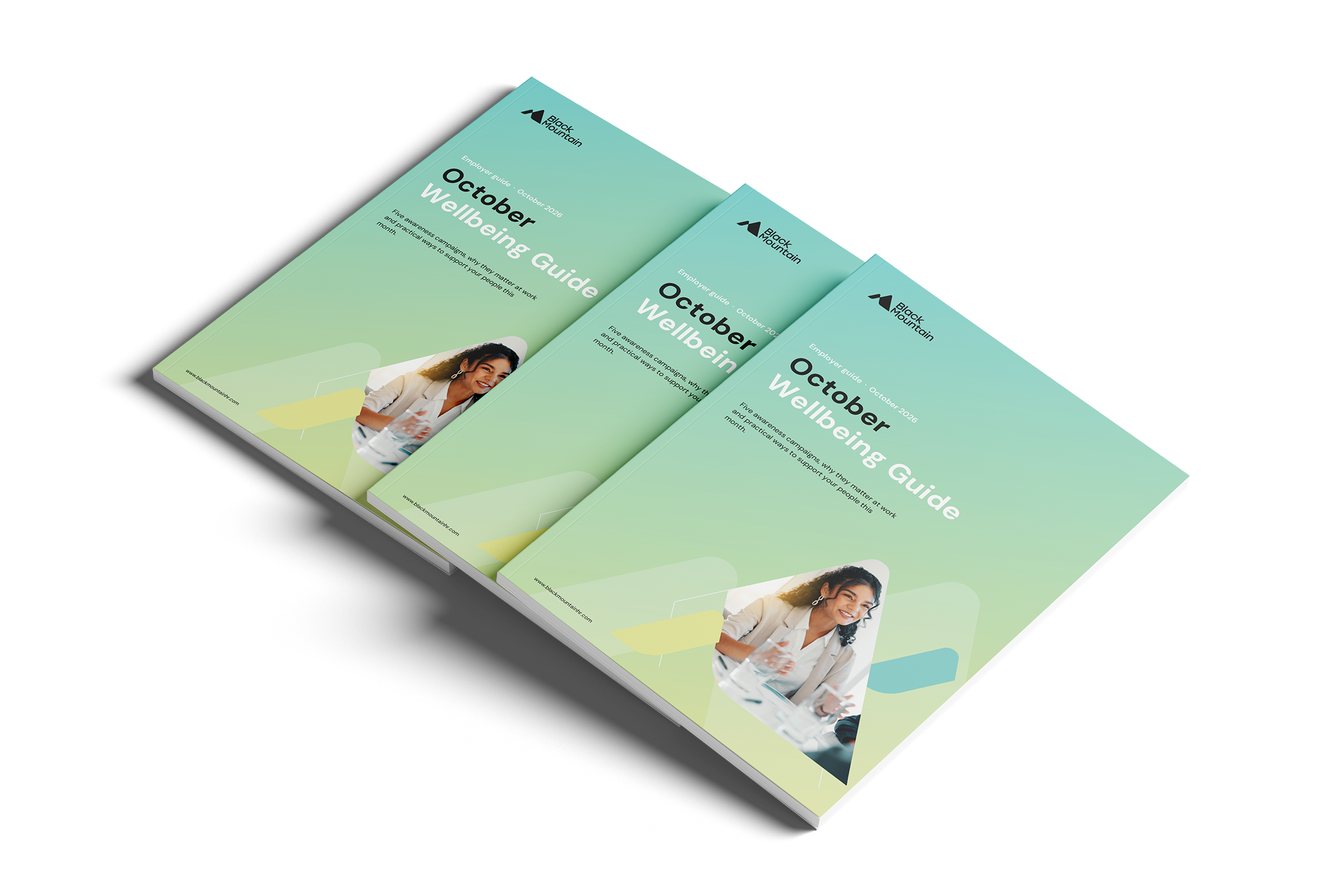
Black Mountain October Wellbeing Guide
Through our HR, Employee Benefits and International Payroll expertise, we help employers create practical wellbeing strategies that support employees throughout the year. What sets us apart:
One partner, not three. HR, employee benefits and payroll are joined up under one contract, with one point of contact, so your policies, benefits and pay work together instead of sitting with separate providers.
Benefits expertise. Our team can broker and benchmark your benefits, from your EAP to health cover, and our employee benefits portal makes it easy for employees to find the support they already have.
Experience you can trust. Since 1996, we have supported more than 800 organisations, from start-ups to global brands, across 165 countries and territories.
Whether you want to review the policies behind each theme, benchmark your benefits or make sure employees know what support is available, call us on +44 (0)1432 272787, email enquiries@blackmountainhr.com or use our contact form.