
Neurodiversity at Work
Neurodiversity at Work
Is your workplace set up for one way of thinking, or for everyone?
Neurodiversity describes the natural variation in how people think, learn, focus and communicate. It covers conditions such as ADHD, autism, dyslexia and dyspraxia. An estimated 15 to 20% of people worldwide are neurodivergent (Kantar MONITOR, via Understood.org), which means almost every team includes neurodivergent colleagues, whether or not they have a diagnosis or have chosen to share it.
October is ADHD Awareness Month, a good moment to look at how well your workplace supports different ways of thinking.
Our view: neuroinclusion is less about specialist programmes and more about good everyday management. Clear communication, flexibility and a willingness to ask “what helps you work well?” make work better for everyone, not just neurodivergent colleagues.
Why neurodiversity matters to employers
It is more common than many people assume. NHS England estimates that around 2.5 million people in England may have ADHD, including many who may remain undiagnosed (NHS England Digital). The independent ADHD taskforce puts the prevalence of ADHD at 3 to 5% of the population (NHS England).
There are legal responsibilities. Some neurodivergent employees may be protected under the Equality Act 2010 when and if their condition meets the legal definition of a disability. This depends on the extent and impact of the condition: it must have a substantial and long-term negative effect on normal daily activities (GOV.UK). Where it does, employers must make reasonable adjustments for disabled workers so they are not put at a substantial disadvantage (GOV.UK).
It affects working parents too. In England, more than 1.8 million pupils have special educational needs. That is 14.8% receiving SEN support and a further 6.0% with an Education, Health and Care (EHC) plan (Department for Education). Supporting a child through the education system can be demanding for parents who are also managing a job. Flexible working, carer’s leave and benefits such as EAP support for parents and carers can all make a real difference.
Six practical steps
1. Build awareness across the whole organisation
Start with the basics: what neurodiversity is, the common myths and the strengths that different thinking styles can bring. Awareness reduces the risk of colleagues misreading behaviour as a lack of effort or interest.
2. Review your recruitment process
Traditional hiring can screen out capable people for reasons unrelated to the job. Unstructured interviews, vague questions and time-pressured tasks often favour one way of thinking. Consider sharing interview questions in advance, offering alternative assessment formats and asking every candidate whether they need adjustments.
3. Make adjustments routine, not exceptional
Many helpful adjustments cost little or nothing: written follow-ups after meetings, quieter workspaces, flexible start times, noise-cancelling headphones or clearer task priorities. The government’s Access to Work scheme can also provide practical and financial support for people with a disability or health condition (GOV.UK).
4. Support inclusive communication
Many workplace misunderstandings come down to communication style. Encourage teams to agree how they share information, give feedback and run meetings, and make clear expectations the default.
5. Equip managers
Managers are usually the first point of contact. Give them the confidence to have supportive conversations, to focus on what helps someone do their best work and to know where to signpost further support.
6. Make the most of your employee benefits
Your existing benefits may already offer more than people realise. Some EAPs and wellbeing platforms include neurodiversity resources, coaching or advice for parents and carers, and a clear benefits portal helps employees find support without having to ask. Check what your providers include, then make sure managers know about it so they can signpost it with confidence.

Questions to ask your team
- Would a candidate know they can ask for adjustments at any stage of recruitment?
- Do managers feel confident having a conversation about what helps someone work well?
- Do your employees know what support their benefits include, and where to find it?
- Are your meetings, written guidance and feedback clear enough for every way of thinking?
Frequently asked questions
- Does an employee need a diagnosis to receive adjustments?
Not necessarily. Many adjustments are simple good practice, and a focus on what helps the individual is often more useful than a label. Diagnosis waiting times can be long, so a supportive approach does not need to wait. - Who should understand neurodiversity at work?
Everyone benefits from basic awareness, but managers, hiring teams and HR have the biggest influence on day-to-day experience, recruitment and adjustments. - Does an employee need to tell us they are neurodivergent?
No. Acas advises offering some support to everyone, such as quiet spaces or noise-cancelling headphones, so people can get help without having to disclose (Acas). - Can employee benefits support neurodivergent employees?
Yes. Depending on your providers, benefits such as an EAP or wellbeing platform may include neurodiversity resources, coaching or support for parents and carers. They work alongside reasonable adjustments and Access to Work, not instead of them. - What is an EHC plan?
An Education, Health and Care plan sets out the support a child or young person with special educational needs is legally entitled to in England.
How Black Mountain can help
Download our free Neurodiversity at Work guide for practical advice on inclusive recruitment, communication, workplace adjustments and supporting working parents, plus a neuroinclusion checklist.
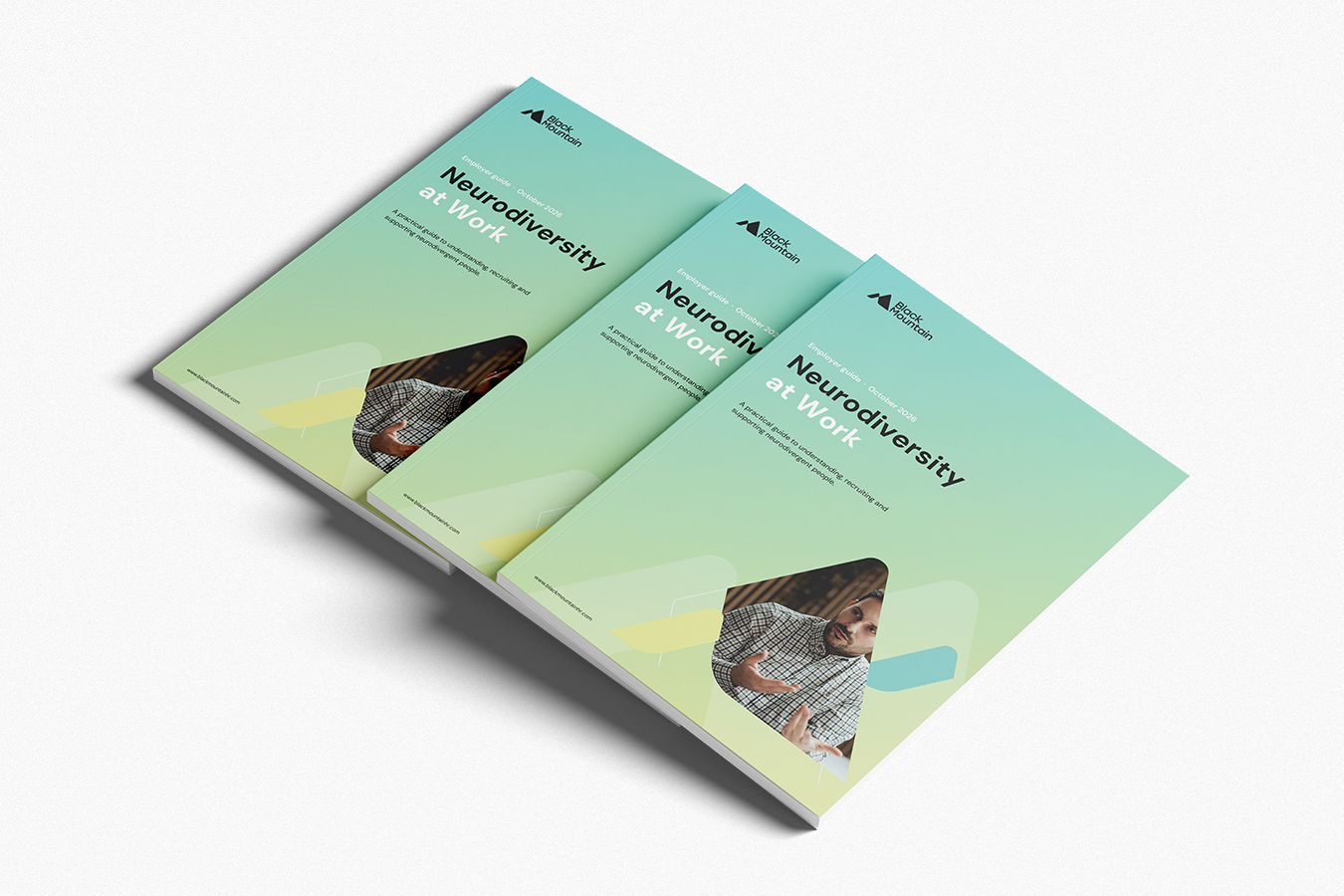
Black Mountain Neurodiversity at Work Guide
Through our HR, Employee Benefits and International Payroll expertise, we help employers create practical wellbeing strategies that support employees throughout the year. What sets us apart:
One partner, not three. HR, employee benefits and payroll are joined up under one contract, with one point of contact, so your policies, benefits and pay work together instead of sitting with separate providers.
Benefits expertise. Our team can broker and benchmark your benefits, from your EAP to health cover, and our employee benefits portal makes it easy for employees to find the support they already have.
Experience you can trust. Since 1996, we have supported more than 800 organisations, from start-ups to global brands, across 165 countries and territories.
To talk about inclusive policies, manager guidance or making sure your benefits support every way of thinking, call us on +44 (0)1432 272787, email enquiries@blackmountainhr.com or use our contact form.